Leave the Gap: Why Unfilled Space Is Where Luck Actually Lives
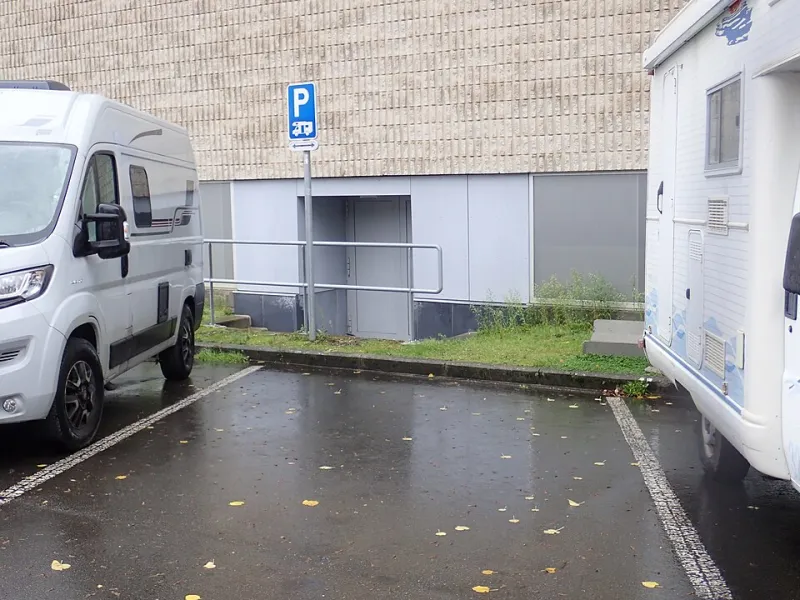
Photo: Elgaard, CC BY 4.0, via Wikimedia Commons
There is a particular feeling to pulling into a crowded lot in late November and finding a spot with an empty space on either side. You do not need the extra room. You have one car. But something in your shoulders drops half an inch, and you get out of the vehicle like a person who is having a better day than they were ninety seconds ago.
That is the whole idea of this piece. Call it the empty parking space principle: the unused room is not wasted room. It is the part that makes the rest of it usable.
Luck Needs Margin
We tend to talk about luck as something that arrives — a good break, a right-place-right-time coincidence, a phone call from someone who was thinking of you. But arrival requires somewhere to arrive into. A calendar with no gaps, a budget with no slack, and a shelf with no air around the objects are all, functionally, full parking lots. Nobody can pull in.
I think this is why so many of us feel faintly unlucky in December. Not because the month is stingy, but because we have paved over every square foot and then wondered why nothing pleasant ever shows up.
Where December Eats the Margin
Three places, mostly.
Time. Every open hour gets claimed by something that feels urgent on November 30 and feels optional on January 2. The gap between those two feelings is where your whole month went.
Money. Not big purchases — the small, frictionless ones. The extra subscription, the second coffee, the thing added to the cart to reach free shipping. None of them are wrong. All of them are occupying spaces.
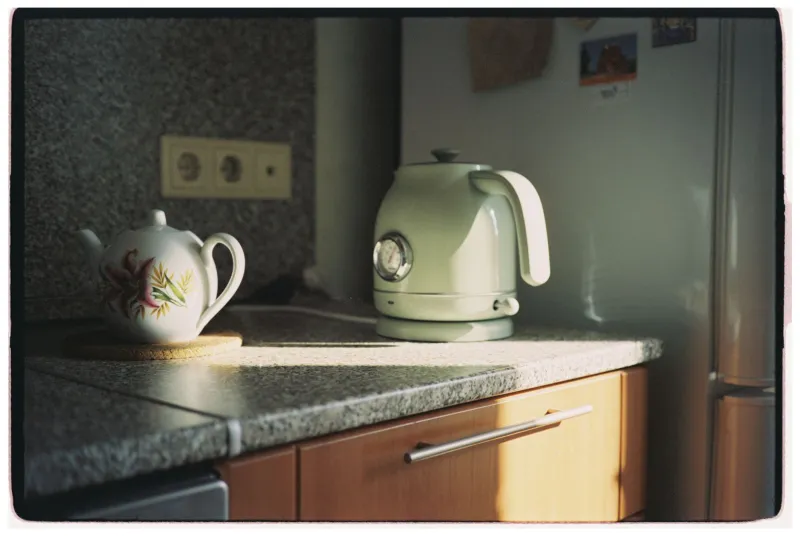
Surfaces. The counter, the entry table, the top of the dresser, the shelf. A flat surface is a rumor that something belongs there, and by mid-December every one of ours is a small crowded parking lot of its own.
Experiment One: The Unscheduled Hour
Once a week in December, block sixty minutes and label it nothing. Not 'buffer.' Not 'catch-up.' Nothing.
If that feels impossible, start with thirty minutes and protect it the way you would protect a dentist appointment. No errands, no inbox, no scrolling — and, this is the hard part, no filling it with a better use. Sit in the car. Take the long way home. Make something. Stare out a window like a person in a novel.
The point is not productivity. The point is that when a friend calls with a last-minute invitation, or the neighbors are outside with a fire pit, or you suddenly have an idea worth chasing, you have somewhere to put it.
Experiment Two: The Unspent Twenty
Take twenty dollars out in cash and do not spend it in December. Keep it in your wallet, folded, in a spot you will notice every time you open it.
This is not frugality advice. It is a physical reminder that your budget has a gap in it. If the neighbor's kid is selling candy bars for a school trip, you have it. If the tip jar at the coffee shop is doing good work, you have it. If nothing comes up, you have twenty dollars and a month's worth of knowing that not every dollar has to be spoken for the moment it arrives.
You would be surprised how often something comes up.
Experiment Three: The Shelf With Air Around It
Pick one shelf, tray, or countertop in your home and leave a third of it empty for the whole month.
Not tidy-with-a-hidden-bin. Actually empty. Two books and a gap. One candle and a lot of wood grain. This is the hardest of the three, because we are trained to read an empty surface as unfinished. But an empty surface is also a place where a Christmas card can land, or a found pinecone, or a gift someone hands you that needs a home for a few days.
Objects with air around them also get looked at more. Try it on the shelf where you keep the things you actually like, and see whether you notice them more or less.
The Obvious Objection
Somebody is going to say that this is just a nice way of describing disorganization, or that margins are for people who can afford them. Fair enough — some seasons genuinely do not have slack, and there is no ritual that changes a tight month into a loose one.
But most of us have more margin than we think, and we spend it out of habit rather than need. The gap does not have to be an hour. It can be ten minutes. It does not have to be twenty dollars. It can be five, or it can be the deliberate decision not to buy the thing at all. It does not have to be a whole shelf. It can be the corner of one.
What Margin Actually Buys
Not luck, exactly. Margin buys availability. It is the difference between a person who could say yes and a person who would love to say yes but cannot find the room.
And availability, over a month or a year, starts to look a lot like luck from the outside. People call it that all the time.
So leave the space. Leave the hour. Leave the empty spot in the lot even though you do not need it. Nothing may park there. Something usually does.