The Last Inch Club: An Evening With Your Leftover Candles
By mid-November, the light in most of the country leaves the party early. Here in the US, plenty of us are eating dinner while the kitchen window goes blue, and the lamp comes on before the plates are cleared. That early dusk is exactly why I started doing something a little odd on purpose: I light the leftover candles.
Not the fancy ones. Not the jar I am saving for a hypothetical dinner party. I mean the stubs. The three-wick with the tunnel in the middle, the votive that lost its wick, the pillar that got moved to the bathroom shelf sometime around Valentine's Day and never found its way back. Late November is their season, and honestly, it might be the luckiest little ritual I have picked up in years.
The Drawer Nobody Talks About
Open the cabinet under your bathroom sink, or the shelf above the fridge, or that one basket in the hall closet, and count them. Most homes have five or six. Some of us have a small candle graveyard and no good explanation for it.
That clutter is not a moral failing. It is a pile of good intentions. Every one of those candles was bought for a reason, lit for a reason, and then set aside when the reason got busy. The holiday candle from last December. The birthday candle from a dinner that ran long. The one you burned during a storm and forgot about when the power came back on.
On a gray Tuesday in November 2026, that shelf starts to look less like a mess and more like an invitation. Half-used things are not failures. They are things that already did some work for you. All they need is one more evening.
What Counts as a Candle End
My rule is simple: if it has a wick and less than half its wax, it is in the club. That includes tea lights, jar candles, and the fancy one you keep moving out of the way to reach the coffee.
Do a quick pass with a few questions. Does it still light? Does it have a safe container? Is the wick taller than a quarter inch? If the answer is yes, it comes downstairs. If the wick is drowned or the glass is cracked, thank it and let it go. Being sentimental about a cracked candle holder is not the same as being charming, and it is definitely not the same as being safe.
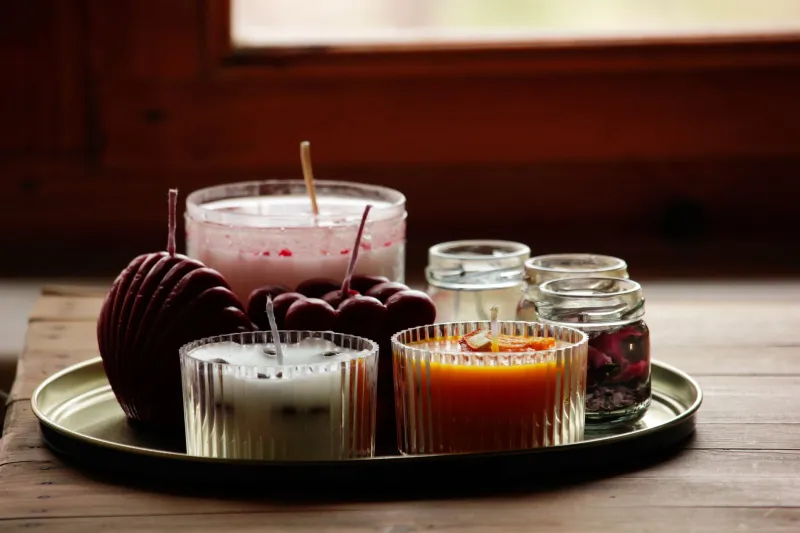
Line them up on a tray or a sheet pan lined with foil. This is not about making a display for guests. It is about giving yourself a clearly marked place where the evening can happen, so the ritual feels like a thing you did on purpose rather than a thing that happened to you.
The Two-Note Rule: Release and Room
Here is the heart of it. Before you strike a match, name two things out loud. The first is one thing you are ready to release. The second is one small joy you want to make room for.
The release does not need to be dramatic. It can be a habit you have outgrown, a grudge that has gotten heavy, a stack of paper you keep meaning to deal with, or a self-improvement project that quietly stopped being fun in September. The room-for joy should be small enough to be believable. A candle on the windowsill at breakfast. Ten minutes with a book before the phone comes out. A standing Sunday walk with a neighbor.
Say both, then light one candle for each. The release candle goes first. The room-for candle goes second. That order matters more than it sounds. It is easy to light the hopeful one and skip the honest one, and the ritual works best when you do both in the same breath.
Watching Wax Do Its Slow Work
Now comes the part that cannot be rushed. Sit with the candles for twenty or thirty minutes. Put on something with a little quiet in it. Fold the laundry. Write two lines in a notebook. Stare out the window at the dark and let the room get warmer around you.
There is a strange, small charm in watching something ordinary burn down. The wax pulls away from the glass. The flame leans when a door opens. A tunnel gets deeper, then shallower, then disappears. Nothing about it is impressive, and that is exactly why it works. Luck, in my experience, is less about lightning striking and more about noticing what is already happening on the table in front of you.
By the time the wicks are down to nubs, the room smells like a candle shop threw a party, and the shelf upstairs looks lighter. You did not add anything to your life. You just used what was already there, which is a very good definition of a lucky evening.
A Few Honest Notes on Safety
Keep the tray away from curtains, paper, and the dog's tail. Trim wicks before lighting. Never leave the room while a flame is going, and never let a candle burn all the way into a dry glass bottom. If a jar gets too hot to touch, blow it out and call it finished. The ritual is cozy, not careless.
And if you only get through two candles before you lose interest, that counts. The last inch does not care about your follow-through. It just wants to be used.
What You Are Left With
At the end, you will have a tray of spent glass and a slightly better-smelling house. You will also have made a small, specific claim on your own attention, which is the closest thing to a lucky charm I know.
Toss the dead tea lights. Soak the jars in warm water and peel the labels off. Keep one or two of the nicer empties for pens, bobby pins, or a little bouquet of dried herbs from the farmers market. The shelf is clear. The drawer has room. And somewhere in the house, a fresh candle is waiting for December, which is exactly the kind of small, bright thing this season is made of.