Why the Short End of the Wishbone Might Be the Luckier Half
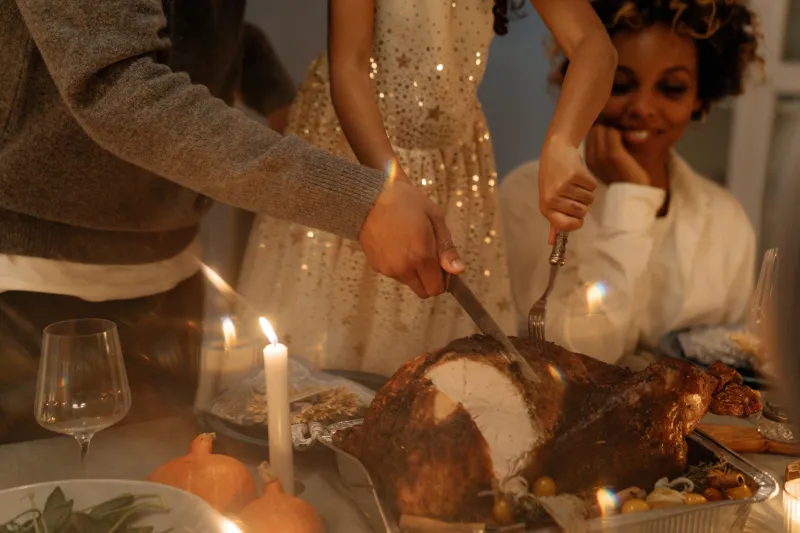
Thanksgiving has a lot of rituals, and most of them involve eating. The wishbone is the odd one out. It's a two-person contest conducted over a picked-clean bird, and it has exactly one winner.
I'd like to argue, politely and with a mouth full of pie, that we've been scoring it wrong this whole time.
The Rule We All Inherited
You know the drill. Let the wishbone dry out for a few days on the kitchen windowsill, then two people hook their pinkies around each end, close their eyes, make a wish, and pull. Whoever snaps off the bigger piece gets their wish. Whoever gets the short end gets a sore finger and a lesson in humility.
It's a fine tradition. It's also a little grim when you think about it — a holiday built around gratitude, capped off with a two-person showdown over who gets to be lucky.
What the Short End Actually Gets You
Here's my case for the stub.
The long half is a receipt. It's proof that you won something, and it comes with all the pressure that winning brings. Now you have to be lucky. You have to remember what you wished for. You have to spend the next twelve months hoping a bone fragment didn't let you down.
The short half, meanwhile, is a blank check. Nobody expects anything from it. It fits nicely in a coat pocket. It doesn't have to deliver. It's the underdog charm — and if there's one thing this little corner of the internet believes in, it's the underdog charm.
Think of it this way: the person with the small piece still has their wish. It just hasn't been cashed in yet. There's something cozy about a wish that's still pending.
The Case for Splitting the Difference
Here's the other thing about the wishbone: the whole contest assumes luck is a fixed quantity. One winner, one loser, one bone. That's scarcity thinking applied to a turkey.
But the luckiest families I know don't run it that way. They break the bone, admire both pieces, and then — this is the good part — they tell each other what they wished for. Or a version of it. Or a story that's better than the wish anyway.
That's the flip. The wishbone stops being a competition and becomes a conversation.
The Post-Thanksgiving Wishbone Flip: A Gentle Ritual
If you're hosting on November 26 this year, or gathering with friends any time that long weekend, here's a small ritual you can try. No rulebook, no winners. It works best with four to eight people and at least one person willing to go first.
You'll need: a dried wishbone, a plate, and about fifteen minutes after the dishes are done.
- Let the bone dry. Two to five days on the windowsill. Some families swear by the oven on low; the windowsill is safer and more charming.
- Break it however you like. Two people can pull, or you can snap it yourself and treat the two pieces as two halves of one story.
- Hand out the halves. Whoever pulled the long piece keeps it. Whoever got the stub keeps it too — and gets first say.
- Small piece goes first. The person with the shorter end names their wish out loud. It doesn't have to be grand. "A quieter spring." "A raise." "My knee to stop clicking." Anything honest counts.
- The long-half person responds with a story. Not advice, not a fix — a story. A good thing that happened to them this year. Ninety seconds, tops.
- Pass the bone. Let the wishbone travel around the table. Each person adds one small wish and one small story. The bone becomes a talking piece rather than a trophy.
- Retire it together. Put the pieces in a little dish, a jar, or a drawer. Next Thanksgiving, pull them out, and the first story of the night is remembering what everyone wished for.
What to Say When It's Your Turn
Nobody freezes harder than a person asked to make a wish out loud. Some gentle prompts that tend to work:
- Something you want more of next year, in one sentence.
- Something that already went better than expected this year.
- A person you're quietly rooting for, and why.
- The smallest good thing that happened to you in November.
Keep it short. Keep it kind. If someone would rather pass, let them pass — a ritual that requires participation isn't a charm, it's homework.
The Part Where Nobody Loses
There's a reason this tradition has survived a few hundred years. The snap is satisfying, the suspense is real, and there's something delightfully old-fashioned about deciding your fate with poultry anatomy.
But the luck of it was never in the bone. It was in the two people holding it, both wishing for something, both hoping the other one gets what they want too.
That's the flip, really. You don't have to win the wishbone to get the good part. You just have to stay at the table a few minutes longer than usual and let somebody else's luck be part of yours.
So this year, if you end up with the stub — congratulations. You got the interesting half.
One Small Reminder
A wishbone is a wish. It's a nice one, and it's worth doing, but don't hand it your whole calendar. Say the wish, tell the story, put the bone in a jar, and then go back to the living room where someone is losing at cards and someone else is reheating the rolls.
The luck is in the room, not the bone. It always was.